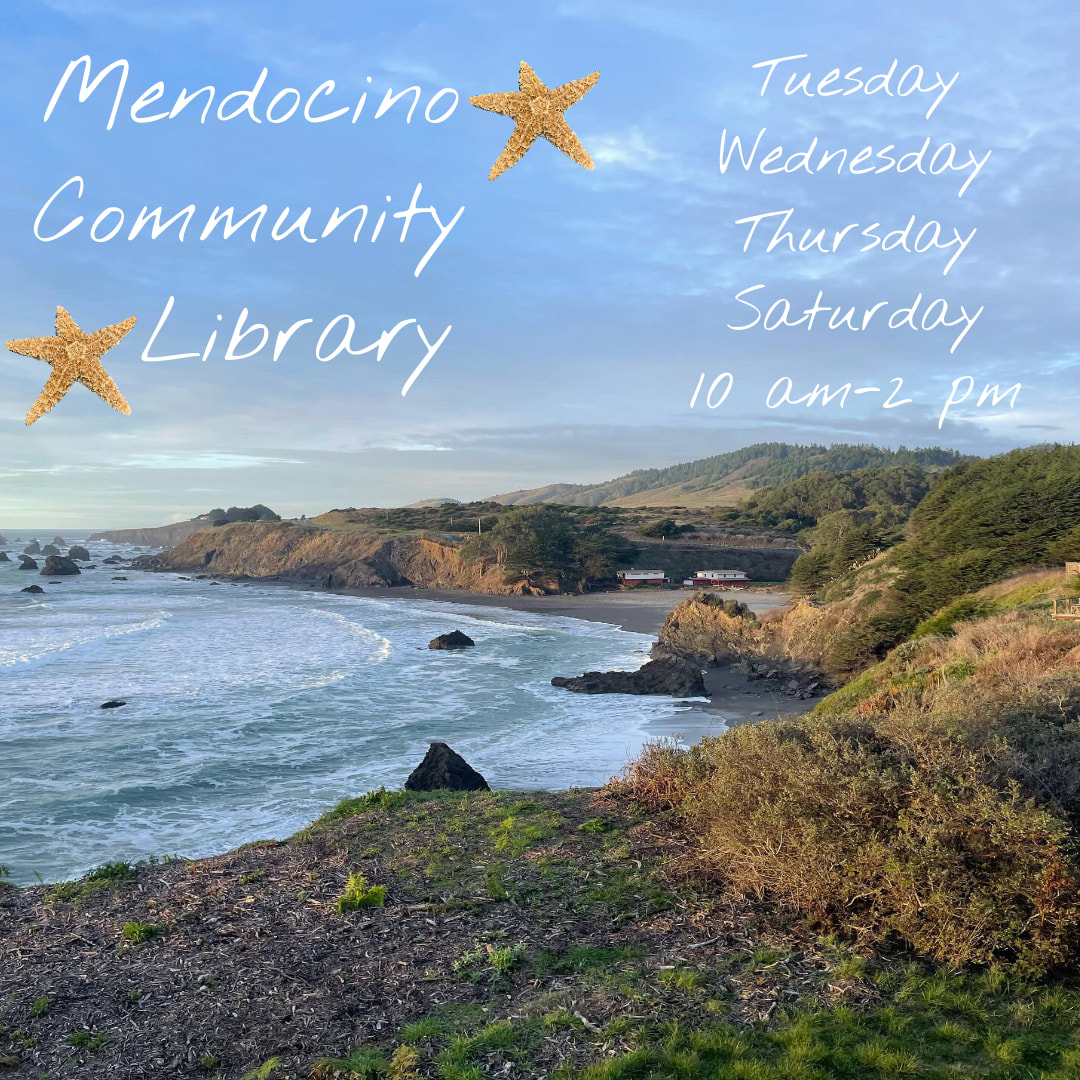
10591 WILLIAM STREET, P.O. BOX 585 MENDOCINO, CA 95460
707 / 937-5773
(A community library in Mendocino village, not affiliated with the county libraries.)
OPEN HOURS: Tuesday, Wednesday, Thursday, & Saturday 10AM - 2PM
707 / 937-5773
(A community library in Mendocino village, not affiliated with the county libraries.)
OPEN HOURS: Tuesday, Wednesday, Thursday, & Saturday 10AM - 2PM
Find Any Book in the library using the catalog.
Check out our newly donated puzzles, games, books, DVDs and more!
Check out our newly donated puzzles, games, books, DVDs and more!
|
Community Library Notes
February 1, 2024 A Clean, Well-Lighted Place by Judith Kvinsland It is always a joy to revisit several locales that I have had the pleasure to once call “Home.” Mendocino is one of those places. This past December, after enjoying several weeks there connecting with friends, former colleagues and neighbors while shopping, or passing each other on the colorful streets, or taking long walks with my family, I welcomed a quiet afternoon. I was surprised when my daughter announced, “One more holiday errand to run. It’s a gift for all of us. Come along, you’re going to love this surprise!” How right she was. In a few minutes we pulled up before the Mendocino Community Library at 10591 William Street. Two desk volunteers quickly and efficiently responded to her request, “I’d like to buy a Family Membership as a Christmas gift for my family.” I was thrilled, knowing that I might also be able to access the library while visiting my family during the coming year. I currently live in eastern Washington and am an avid patron of our large Mid-Columbia Library System that is composed of 12 branches. I visit my local branch once or twice a week and always begin my visit at the Recent Acquisition shelves. On the afternoon a few weeks ago in Mendocino, I was drawn to the prominent bookcase marked Recent Acquisitions. As I browsed, I saw many of the same books I had just checked out and marveled at the currency of the local collection. As well, I was drawn to authors I did not know, including Donna Leon. Returning to my daughter’s house, I curled up with Leon’s memoir, Wandering Through Life. As a writer, as well as an avid reader of memoirs, I found Leon’s book an enjoyable read. If you like memoirs, you’ll enjoy it too. That book led me to check out several of her previous novels at my local library when I got back home. Most are mysteries set in Italy, where she was once a resident. Leon now lives in Switzerland. Another recent acquisition that caught my eye was by an author well known to me and perhaps, to you: Charles Frazier of Cold Mountain fame. That unforgettable book was published in 1997, and won The National Book Award for Fiction. Frazier’s latest work of fiction, The Trackers, provides a wide-ranging glimpse of The Great Depression years. It begins in rural Wyoming, carries the reader west to San Francisco, and then across the country to Florida. If you are interested in historical fiction and enjoy more than a bit of suspense, you may want to acquaint, or reacquaint, yourself with Charles Frazier. To support, enjoy, or learn about this remarkable local resource, visit the Mendocino Community Library. It is open Tuesday, Wednesday, Thursday, and Saturday, 10:00 AM – 2:00 PM. Family Memberships can be purchased for only $25 annually, and Individual Memberships for $15. After becoming a member, you can also apply to be a volunteer, joining others who are active in this wonderful community organization.
Community Library Notes March 2, 2023 Real Page Turners by Sarah Nathe It’s called popular fiction for a good reason: it flies off the shelves in book stores, libraries, and airport gift shops. Also known as vacation books or trade paperbacks, these novels come in various genres: mystery, romance, crime, horror, adventure, science fiction, fantasy, and period histories. The Mendocino Community Library’s Pop-Up Fiction Section was developed nearly a year ago; with nearly 90 titles, it has proven to be a favorite of many readers. If you are not familiar with any of these authors, we invite you to try one or two. We have brand new titles by New York Times #1 bestselling writers as well as a number of evergreen authors—Agatha Christie and Josephine Tey, named one of the greatest crime novelists of all time by the Crime Writers’ Association. If you like your murder mysteries set in an English school for young women vulnerable to sinister undercurrents of rivalry and jealousy, Tey’s Miss Pym Disposes will not disappoint. For a little Gallic ambience, try The Paris Secret by Natasha Lester, an internationally best-selling Australian writer. When Kat Jourdan discovers a collection of priceless Dior gowns hidden in her dead grandmother’s remote cottage, she is drawn into the mystery of their origin, determined to know more about her beloved grandmother’s secret past. Prior to her writing career, Lester was a marketing executive for L’Oreal, managing the Maybelline brand, so she knows a few things about the fashion world. In a neighboring arondissement, Light of Paris, by Eleanor Brown, presents us with the diary of a stodgy grandmother in which she chronicles a romantic trip to Jazz Age Paris. The exciting life she lived there during the 1920s inspires her granddaughter to live her own Parisian adventure, as the story shifts between the present and the past and each woman fights for a chance to choose for herself. To the north and west of the City of Light, in a wild Irish landscape, Niall Williams’ Four Letters of Love is an affecting love story and a testament to the power of magic and fate. Called a “classic of Irish literature” by the Belfast Telegraph, the novel is currently being made into a movie with Pierce Brosnan and Helena Bonham Carter. Continuing in the Hibernian mode, Flynn Berry’s Northern Spy is a portrait of the modern IRA and of sisterhood and motherhood, as well as a look at life in a deeply divided country. Named by both the New York Times and the Washington Post as one of the top thrillers of 2021, Northern Spy was chosen by Reese Witherspoon for her Book Club: “I loved this unputdownable thrill ride of a book.” Just off the coast of the Emerald Isle on a remote island, a dizzying array of suspects at a celebrity wedding populate Lucy Foley’s The Guest List, called “the perfect whodunit” by Marie Claire. There’s a murder, but there’s so much more than that. The Library Journal promises that “Fans of Christie, Louise Penny, and Ruth Rendell will absolutely love this book.” Jenny Colgan is a Scottish writer of romantic comedy fiction and science-fiction, and the library owns several of her titles. “Nobody does cosy, get-away-from-it-all romance like Jenny Colgan,”according to the Sunday Express. With The Little Beach Street Bakery, 500 Miles from You, and others, Colgan won the 2013 Romantic Novel of the Year award and the 2018 Romantic Novelists Association award for Comedy Novel of the Year. A Beautiful Blue Death, by Charles Finch, serves up equal parts Sherlock Holmes and P.G. Wodehouse, and an appealing gentleman detective in Victorian London who investigates crime as a diversion from his life of leisure. Charles Lenox likes to relax in his private study with a cup of tea, a roaring fire and a good book, but he cannot resist the chance to unravel a mystery. Set in England during and after WWII, Kate Quinn’s Rose Code is a riveting tale of three women code breakers who worked at Bletchley Park, and the spy they must find when the war is over. As the royal wedding of Princess Elizabeth and Prince Philip takes center stage in British life, the three friends suspect that a traitor is lurking in the shadows. Another story with historical roots is The Second Mrs. Astor, by Shana Abe, which brings to life the romantic love story between John Jacob Astor and his young bride, Madeleine. You may fall in love with this appealing couple as they move from their honeymoon in Egypt to their mansion on Fifth Avenue and, despite knowing better, find yourself hoping they avoid the tragedy that awaits on the Titanic. Author of 19 bestsellers, some of which spent over a year on the NYT list, Lisa Jewell has been called “the queen of psychological suspense.” Among her more popular titles are the domestic dramas The Family Upstairs and the million-copy seller Then She Was Gone, which delves into the lingering effects on her family of a 15-year old girl’s disappearance. In Jessica Francis Kane’s Rules for Visiting, when 40-year-old gardener May Attaway receives a month of vacation from the university where she works, she decides to visit four old friends, each one from different periods of her life. Through this starting point, Kane explores the mysteries of female friendship over time and especially now in the digital age. I have mentioned only a few of our Pop-Up Fiction titles, but drop by the library sometime and check out a couple. The Mendocino Community Library is open Tuesday, Thursday, and Saturday from 10:00 am to 2:00 pm. Besides books, we have magazines, jigsaw puzzles, books on CD, and movie DVDs. On our web page (https://www.mendocinocommunitylibrary.org/) you can find any item in our collection. February 9, 2023 Get ‘Em While They’re Hot by Sarah Nathe There’s no better way to start the new year than by laying in a supply of new books, and the Mendocino Community Library has done just that. We have award-winning fiction, gripping mysteries and thrillers, and serious and humorous nonfiction, many of them New York Times notable books of 2022. Through the generosity of our book donors, we have also acquired some not-so-new books that are nonetheless worth reading, and some vintage British crime whodunits that are less known on this side of the pond, but beloved by connoisseurs of the genre. Space doesn’t permit annotating all the new books here, but this list will pique your interest. FICTION Quan Barry, When I’m Gone, Look for Me in the East, 2022. Across a windswept Mongolia, estranged twin brothers make a journey of duty, conflict, and renewed understanding. Marie Benedict, The Mitford Affair, 2023. This biographical novel tells the story of the influential British Mitford sisters and the roles they played for and against the Nazis in the lead-up to, and during World War II. John Boyne, All the Broken Places, 2022 Katherine Chen, Joan: A Novel of Joan of Arc, 2022. Not your grandmother’s St. Joan, this one is an ass-kicking, avenging angel fighting simply for the right to fight. Tess Gunty, The Rabbit Hutch, 2022 Elin Hilderbrand, Hotel Nantucket, 2022 Clare Keegan, Foster, 2022. Don’t let the length of this beautifully subtle novella by an accomplished Irish writer make you think it won’t move you more than a 400-page tome. Kerri Maher, The Paris Bookseller, 2022 Cormac McCarthy, Stella Maris, 2022 Joanna Quinn, The Whalebone Theatre, 2022. Follows a trio of British youngsters from childhood idylls on the beach to service and spycraft in WWII. MYSTERIES From the Golden Age of British crime detective fiction, we have four new-to-us classics: George Bellairs, Death of a Busybody, 1942; John Bude, Death Makes a Prophet, 1947; Mavis Hay, Death on the Cherwell, 1935; and Anthony Wynne, Murder of a Lady, 1931. Kate Atkinson, Behind the Scenes at the Museum, 1985. While not a mystery, this is Atkinson’s debut novel and her fans will want to read it. Rhys Bowen, Peril in Paris, 2022 Janet Evanovich, Game On: Tempting Twenty-Eight, 2021. Stephanie Plum returns to hunt down a new kind of criminal operating out of Trenton in the 28th book in the popular series. Sulari Gentill, The Woman in the Library, 2022. How can you go wrong with a murder mystery that starts off in a crowded library full of book lovers? Catriona McPherson, Dandy Gilver and a Bothersome Number of Corpses, 2013. A mystery writer perfect for fans of “Upstairs Downstairs” and “Downton Abbey,” McPherson charms readers with her clever series set in 1920s Scotland. Mystery Writers of America, Odd Partners: An Anthology, 2019. Unlikely pairs join forces to crack a slew of intriguing cases in an anthology edited by Anne Perry, with original stories by Jacqueline Winspear, Jeffery Deaver, Allison Brennan, Charles Todd, and Perry herself. James Patterson, Shattered, 2022. Thomas Perry, The Left-Handed Twin, 2021, and The Murder Book, 2023. Karin Slaughter, False Witness, 2021. A master of the no-holds-barred law enforcement thriller turns to legal intrigue, with sobering results. Martin Walker, To Kill a Troubadour, 2022. NONFICTION Iain Boall, West of Eden: Communes and Utopia in Northern California, 2012. Describes the remarkable flowering of communalism in the 1960s and ’70s in northern California, with vivid portraits of life on the rural communes of Mendocino and Sonoma counties. Andy Borowitz, Profiles in Ignorance, 2022. Kerri Greenidge, The Grimkes: The Legacy of Slavery in an American Family, 2022. Pico Iyer, The Half-Known Life, 2023. Joseph Ledoux, The Deep History of Ourselves, 2019. A leading neuroscientist’s history of the evolution of the brain from unicellular organisms to the complexity of animals and human beings today. Adam Nicolson, Life Between the Tides, 2022. Everyone who lives on the coast will enjoy this beautifully illustrated exploration of the marine life that lives where the sea meets the land. Imani Perry, South to America: A Journey Below the Mason Dixon. Winner of the 2022 National Book Award and an elegant meditation on the complexities of the American South by a daughter of the South and one of our most provocative thinkers. In addition to all these terrific hardbound books, don’t forget to browse our "PopUp" fiction collection. We're always adding new and almost new thrillers, historical novels, and cozy reads in convenient paperback format. On February 18th, the library will hold one of its acclaimed book sales, offering all kinds of reading material at irresistible prices. Also puzzles, CDs and DVDs. Drop by and check it out; leave with some great stuff; benefit the library and feel good about yourself. From 11 a.m. to 3 p.m. outside the library at Little Lake and William Street. |
|
January 9, 2023
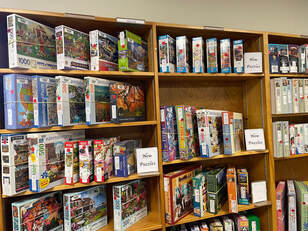
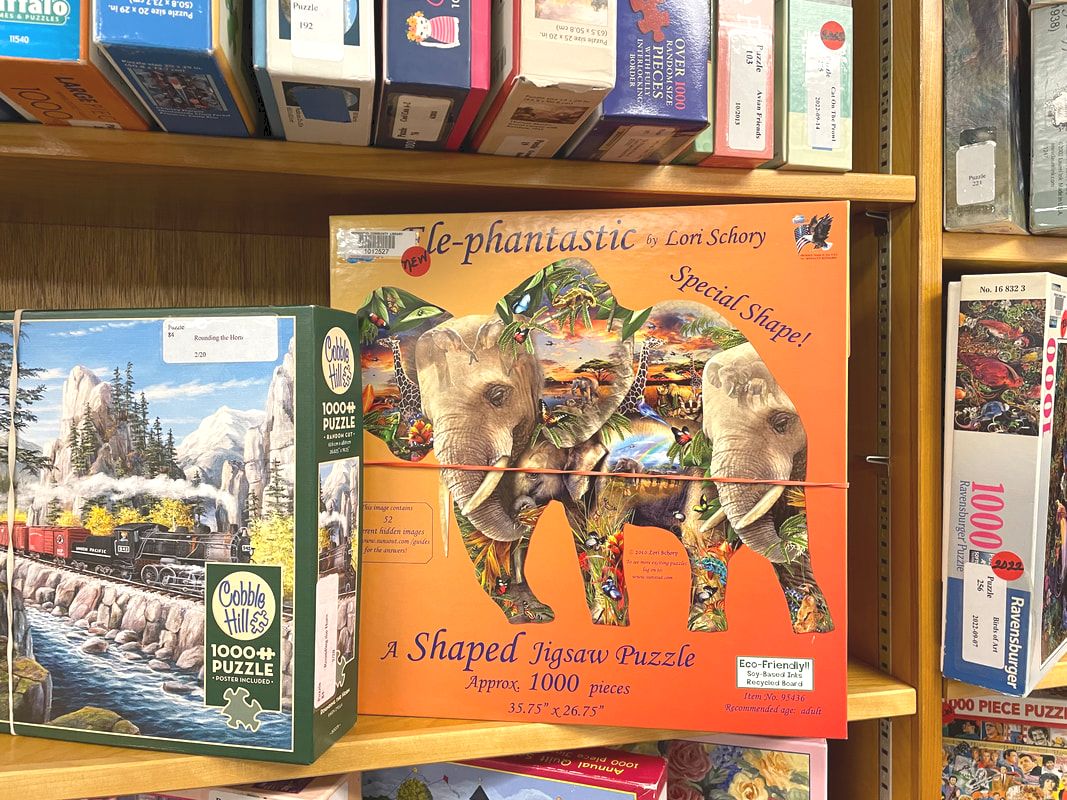
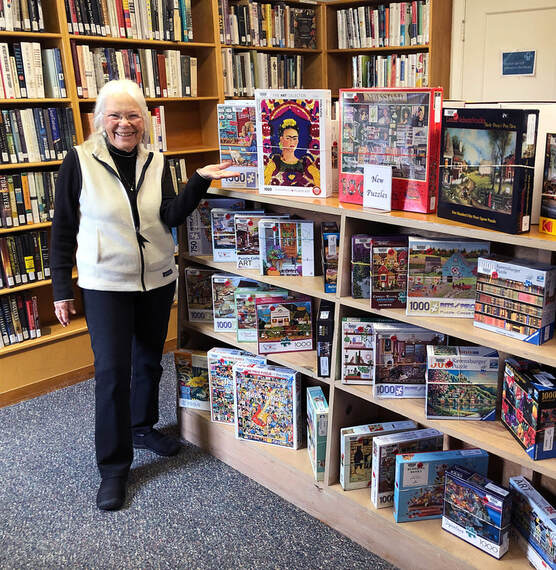
Yes, the puzzles have been moved to a larger room in order to accommodate all the amazing new puzzles. Calling all "puzzlers" come and check it out! You'll be amazed. |
|
|

January 5, 2023
A Prosperous New Year!
by Sarah Nathe
We’re starting a Chinese New Year tradition at the Mendocino Community Library: sharing a bounty of books on Chinese history and culture for readers of all ages. The books are a gift from the generous board of directors at the Temple of Kwan Tai, and they will be specially displayed, and available for check out, starting in early January. Located down on Albion Street, the temple is one of the oldest, best preserved Chinese temples in California; part of its mission is to enhance public understanding of Chinese immigrant life and history here on the coast. The Year of the Rabbit begins on Sunday, January 22nd and we are happy to focus on the Rabbit sign’s promise of longevity, peace, and prosperity, and to celebrate the fact that 2023 is a year of hope.
Reference Books
Good Luck Life: The Essential Guide to Chinese American Celebrations and Culture, by Rosemary Gong. This treasury explains the meanings of Chinese rituals and offers advice on when and how to plan for Chinese holidays and special occasions.
The Handbook of Chinese Horoscopes, by Laura and Theodora Lau. The definitive, classic work on this fascinating subject, artfully combining the Eastern lunar calendar with Western solar-based astrology
Rise: A Pop History of Asian America from the Nineties to Now, by Jeff Yan, Phil Yu, and Philip Wang. A magical tour through the past three decades (and more) of Asian American history and culture.
DVD
“Chinatown Rising,” by Harry and Josh Chuck. Against the backdrop of the Civil Rights Movement of the 1960s, a San Francisco film student and Chinatown resident turned his lens on his community. Weaving together never-before-seen footage and photographs, this excellent documentary spans three generations in its portrait of the historic neighborhood in transition.
Local Interest
Look Tin Eli: The Mendocino Visionary Who Helped Shape the Chinese American Experience, by Robert Becker and Jane Tillis. This Kelley House historical review explores the remarkable life of Mendocino-born Look Tin Eli, whose groundbreaking career in San Francisco did much to establish Chinese immigrants as business leaders and exemplify how newcomers could improve their economic and social standing while advancing the prosperity of California.
Chinese in Mendocino County, by Lorraine Hee-Chorley. Arcadia Publishing’s Images of America Series features old photographs with detailed descriptive captions that chronicle the contributions of Chinese immigrants to the development of Mendocino County.
Adult Fiction
China: The Novel, by Edward Rutherfurd. The story begins in 1839, at the dawn of the First Opium War, and follows Chinese history through Mao's Cultural Revolution up to the present day. In his epic new book, Rutherfurd brings to life the ever-changing fortunes of Chinese, British, and American families in China. This well-researched story sets the stage for China’s role in the world today, and humanizes the story of how China became a rising global power.
How Much of these Hills is Gold, by C Pam Zhang. This debut novel is a tough-minded and skillful reexamination of the myth of the American West: by filling in the faces, names, and stories that have often been missing from the picture.
Young Adult Books
Luck of the Titanic, by Stacey Lee. This historical fiction tells the story of the six Titanic survivors of Chinese descent. It follows twins Valora and Jamie Luck, British-Chinese acrobats who made it out alive.
Daughter of the Moon Goddess, by Sue Lynn Tan. A captivating debut fantasy inspired by the legend of Chang'e, the Chinese moon goddess.
Zachary Ying and the Dragon Emperor, by Xiran Jay Zhao. Gamer Zachary Ying desperately wants to fit in outside the virtual world of Mythrealm, but as the only Asian kid in his largely white Maine town, he quietly avoids standing out. But his mom’s illness forces him to step up.
Children’s Books
Holidays around the World: Celebrate Chinese New Year, by Carolyn Otto. This National Geographic book makes it colorful and interesting for children 3-8 to learn how Chinese people everywhere ring in the new and ring out the old.
Chinese New Year Wishes, by Jillian Lin. In this beautifully illustrated book, children aged 2 to 6 will follow Hong as he and his family prepare for and celebrate the New Year Festival.
How to Catch a Dragon, by Adam Wallace. In this book for 3-5 year olds, kids are trying to catch a dragon as they chase him through Chinese New Year celebrations. The wily dragon has to avoid traps as the kids chase him through paper lanterns, red lunar envelopes, and fireworks.
Amy Wu and the Patchwork Dragon, by Kat Zhang. In this sweet and brightly illustrated picture book for 4-8 year olds, Amy Wu must craft a dragon unlike any other in her class at school.
Lunar New Year, by Hannah Eliot. Part of the Celebrate the World Series, this board book teaches readers from 1-5 that Lunar New Year invites us to spend time with family and friends. With beautiful artwork by Chinese illustrator Alina Chau, the book invites readers to light lanterns, set off fireworks, and dance with dragons.
Watercress, by Andrea Wang. This autobiographical story is “both an apology and a love letter to my parents.” For readers from 6-10, it’s a bittersweet, delicate look at how sharing the difficult parts of our pasts can create new moments of family history, and help connect us to our roots.
A Big Mooncake for Little Star, by Grace Lin For ages 3-5, this gorgeous picture book tells a whimsical origin story of the phases of the moon.
The Mendocino Community Library is grateful to the Temple of Kwan Tai for these valuable additions to our collection. We invite you to drop by to look them over; you can even check most of them out. The library, located at the corner of William and Little Lake, is open Tuesday, Thursday and Saturday from 10:00 am until 2:00 pm.
Dec. 1, 2022
Something Old, Something New: All Very Mysterious
by Stephanie Simonich
Are you ready for some fresh faces in the mysteries you read? Visit the Mendocino Community Library and take a look at The Poacher’s Son, the first in a series by Paul Doiron. In this engrossing debut novel, take a trip to the Maine coast and islands with Game Warden Mike Bowditch, who must find the real cop-killer before his hard-drinking, no-good father is charged with the crime. Dorion’s Edgar-, Anthony- and MacCavity-award-nominated mysteries feature engaging characters, suspenseful plots, and the natural beauty and complexity of the Downeast state.
Also new to the library is the Glacier Mystery series—four books by Christine Carbo set in the breathtaking Glacier National Park area in Montana. The first is The Wild Inside, about the perilous, unforgiving intersection between man and nature. Carbo displays her knowledge of the natural world and the human heart. Her series is thoughtful, suspenseful and enjoyably plotted, taking place in the park wilderness and nearby towns.
For something completely different from these two outdoor-oriented series, consider picking up one by Rachel Howzell Hall. The Detective Elouise Norton series presents an appealing black female Los Angeles PD detective who is complex, intuitive and smart as a whip. The books show the seamier side of LA, and immerse us in the personal and professional challenges of this sarcastic, engaging detective. Start with Land of Shadows, but that won’t be the last one you read!
If you are a fan of historical mysteries who enjoys excellent writing with a minimum of gore, sample a series that has been filled in for us by a generous donor. The Dandy Gilver mysteries by Catriona MacPherson are set in the Golden Age of British mysteries—the 1920’s and 30’s—by an author who is compared to Christie, but with the wit of PG Wodehouse or Nancy Mitford. Begin with After the Armistice Ball. Other recent donations include historical mysteries by Barbara Cleverly (the Joe Sandilands series, and India during the Raj), and Charles Finch (Charles Lennox, gentleman sleuth inVictorian London).
Of course, the library also has a great many new mysteries and thrillers by your favorite authors! Come in and check out these hot titles: Lee Child, No Plan B; Ann Cleeves, The Rising Tide; Patricia Cornwell, Livid; Robert Crais, Racing the Light; Val McDermid, 1989; Nelson Demille, The Maze: 8; Richard Osman, The Bullet that Missed; Ian Rankin, A Heart Full of Headstone; John Sandford, Righteous Prey.
Coming soon, the new Louise Penny, A World of Curiosities, and the latest Michael Connelly, Desert Star. Put your name on the request list the next time you visit the library. The library is located at the corner of Little Lake and William Street in Mendocino, and it is open 10-2 on Tuesday, Thursday, and Saturday. We will be open on December 24th and the 31st to ensure that everyone can maintain a supply of good books to get them through the holidays
Oct 10, 2022
Thanks for making our October book sale a great success!
Your gently used donations of books and media help us raise funds to buy more new materials for the library.
We continue to be open three days a week: Tuesday, Thursday, and Saturday from 10 am – 2 pm. We look forward to seeing you soon! If you haven’t renewed your membership, you may do so either by mail or in person.
All appropriate safety measures will continue. Masks are required.
No fines are being charged at this time.
If you have questions or concerns, please call the library at 937-5773 during open hours or send an email to mclib@mcn.org.
Watch this space for further updates and thanks for your patience and support during the past two and a half year
Children Matter
at the Mendocino Community Library
Nov, 3, 2022
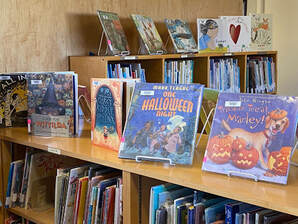
The children’s section of the Mendocino Community Library is chock full of books for children of all ages. New books are added to the collection every month, starting with award-winning picture books for pre-readers and running through early readers and chapter books for advanced young bookworms. Jigsaw puzzles for all ages as well as movies rated G or PG and audio books are also offered in this section. It’s a great resource for entertaining visiting grandchildren.
Samples of the latest book additions are: In My Heart: A Book of Feelings written by Jo Witek and illustrated by Christine Roussey. Happiness, sadness, bravery, anger, shyness . . . our hearts can feel so many feelings. In My Heart explores a full range of emotions, describing how people feel physically, helping children identify their own emotions. With whimsical illustrations and an irresistible die-cut heart that extends through each page, this unique feelings book is beautifully packaged.
Don’t Worry, Murray by Caldecott Honor-winning artist David Ezra Stein tells the story of Murray who worries about a lot of things. It’s a tender and reassuring story about facing our fears, whatever they may be.
Ocean Meets Sky by Eric and Terry Fan introduces the reader to Finn who lives by the sea. Every time he looks out his window it’s a constant reminder of the stories his grandfather told him about the place where the ocean meets the sky, where whales and jellyfish soar and birds and castles float. The illustrations in this story are particularly wonderful.
Small Pieces Make the Big Picture
Oct. 7, 2022
by Sally Fletcher
When the days get shorter and night falls earlier, I think it’s a great time for jigsaw puzzling. Puzzling is an engrossing activity for people of all ages. It is challenging, fun, meditative, and increases cognitive skills and short-term memory. You can enjoy conversation with other puzzlers or listen to your favorite music while challenging your brain. When the puzzle is completed, you can enjoy your accomplishment for a bit, then gather it up, and pass it on to the next person to enjoy.
The first jigsaw puzzle was created in 1766 by a cartographer and engraver in England named John Spilsbury. He affixed a world map to a wood backing and carved out each country. He gave it to children in the local school to help them with their geography education. He created eight different puzzles: the world, Europe, Asia, Africa, North America, England and Wales, Ireland, and Scotland. He called them “dissected Maps,” but they began to be made with jig saws as their popularity grew, and eventually the puzzle was named after the tool that made it.
The Mendocino Community Library has added over 200 new jigsaw puzzles to its collection this year. For the modest price of a yearly membership to the library—$10.00 for individuals and $18.00 for the whole family—you can have access to hundreds of different jigsaw puzzles any time you get the urge.
Many puzzlers have a favorite brand. We have a large selection: Ravensberger, White Mountain, Eurographics, Bits and Pieces, Pomegranate, Charles Wysocki, New York Puzzle Company, Springbok, Cobble Hill, and more. In addition to puzzles for adults, we have puzzles for children that have fewer but larger pieces. The easy puzzles have 100-300 pieces; the more difficult ones have 500, 750, 1000, 1500, and even 2000 pieces. According to puzzle masters, doubling the number of pieces quadruples the difficulty.
There are many different ways to do a jigsaw puzzle. I enjoy sorting the pieces by location so I take out the edge pieces and complete the border first. Then I sort the rest by color or design and start filling in the puzzle. My niece, who is a master puzzler, leaves all the pieces in the box while she finds and does border pieces. Then she just pokes around in the box finding pieces until she has completed the whole thing. She can complete a puzzle in a day or two, whereas I sometimes take a week or two.
Please come have a look at our new jigsaw puzzle collection and join the world of puzzling. If you have puzzles in your closet that you have completed, consider donating them to the library for others to enjoy. Hope to see you soon in the puzzle room!
|
Google Maps - Directions
|
After more than half a century of community support, the Mendocino Community Library now holds 13,000+ books, movies, music CDs, PUZZLES and audiobooks. The library has an extensive collection of puzzles, children’s books, audio books and movies including those filmed in Mendocino.
Library is staffed by volunteers and supported by donations. We welcome donated books.
|

10591 WILLIAM STREET, P.O. BOX 585 MENDOCINO, CA 95460